
CNC technology trends in 2026

The year 2026 confirms a long-term trend: CNC technologies are moving away from isolated machine tools toward fully connected and autonomous production cells. These combine robotic automation, digital production control, energy efficiency, and smart operator support.

Automation and robotic cells

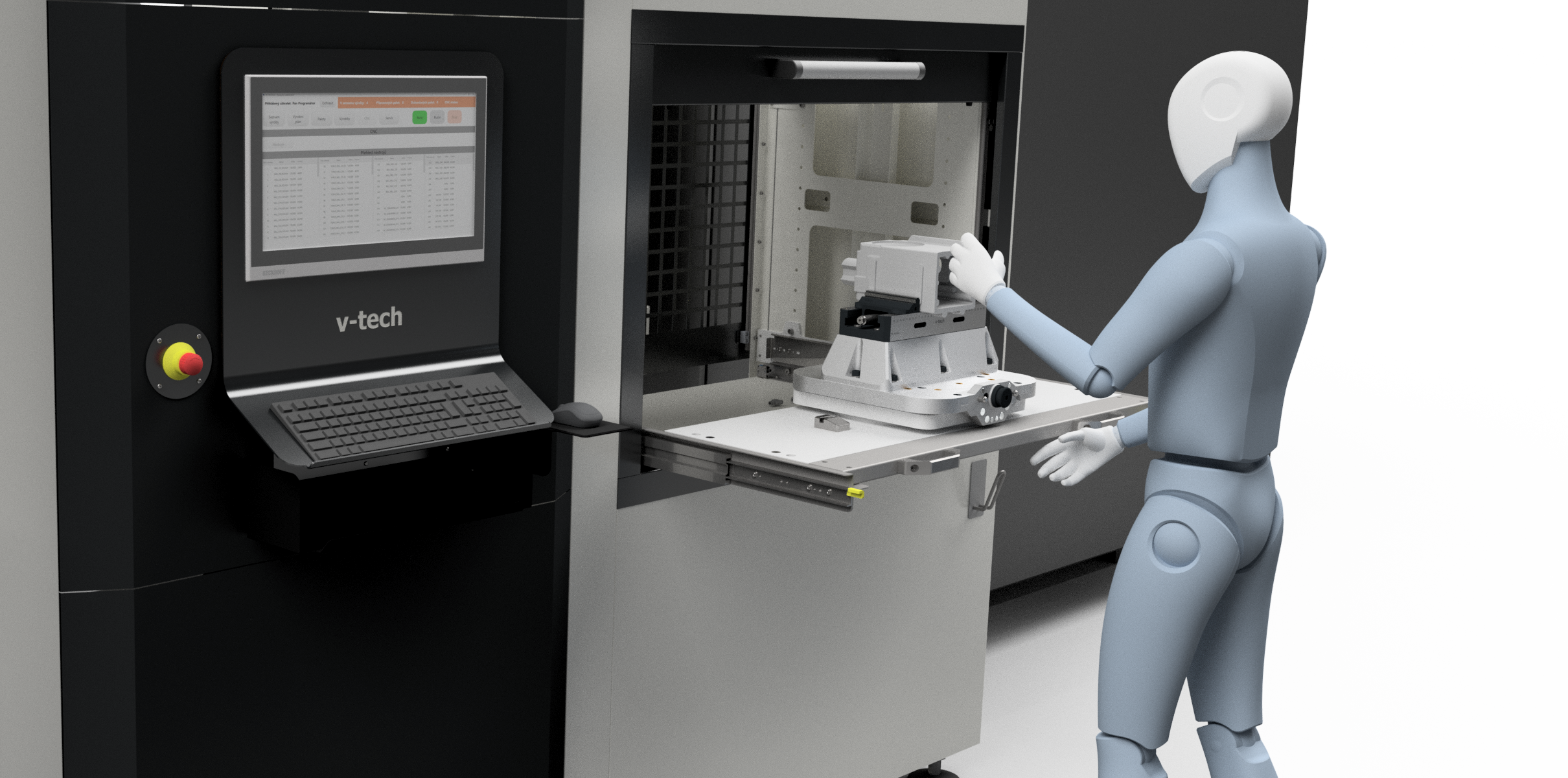
More and more manufacturing companies are building robotic cells directly next to CNC machines, which handle workpieces, pallets, and clamping devices. The Robot Point interface developed by v-tech s.r.o. enables safe, accurate, and repeatable pallet transfer between the robot and the clamping system, which is a key prerequisite for reliable automated production.

Another significant shift is the agent behavior of production systems. Artificial intelligence no longer functions solely as a passive advisor, but is able to independently assess the situation, recommend adjustments to cutting conditions, or control the flow of production according to the current status of the machine and orders. The CNC machine thus becomes an active part of the smart production cell.

Thanks to these technologies, the concept of lights-out production—unattended operation at night and on weekends—is becoming a reality. Robotic arms operate multiple machines, automatic stackers change pallets, and monitoring software oversees the entire process. For Czech manufacturing companies, this means the opportunity to increase capacity without significantly increasing the number of employees, while at the same time strengthening their competitiveness in foreign markets.

Sustainability and energy efficiency in CNC manufacturing

With growing pressure on environmental issues and reducing operating costs, energy efficiency and sustainability in manufacturing are coming to the fore. A significant trend is retrofitting—the modernization of older CNC machines, which is an environmentally friendly and economically advantageous alternative to purchasing new equipment.

Instead of disposing of the robust cast iron frames of older machines, control systems and drives are replaced and modern sensors are added. This significantly extends the life cycle of the machine and reduces its energy consumption. At the same time, companies are increasingly using software tools to analyze energy consumption in real time, which helps identify waste and optimize production cycles with regard to the carbon footprint of each manufactured part.

Shortage of skilled workers and the role of CNC automation

Czech industry has long struggled with a shortage of skilled CNC operators and adjusters. In 2026, automation will become not an option, but a necessity for maintaining competitiveness.

Automation does not serve to replace people, but to take over routine, monotonous, and physically demanding work. Human potential can thus focus on activities with higher added value – technological preparation of production, process optimization, or quality control. The Industry 5.0 concept emphasizes human-machine collaboration, where collaborative robots and smart software assistants simplify operation and diagnostics and create a more attractive working environment for a new generation of technicians.

Smart clamping systems and sensors for monitoring the machining process

Today, it is not only the machine itself that plays a key role in the efficiency of the entire CNC machining process, but also the method of clamping the workpiece and tool and the ability to monitor the production process in real time. It is the combination of stable clamping and high-quality data that forms the basis for reliable, repeatable, and cost-effective machining.

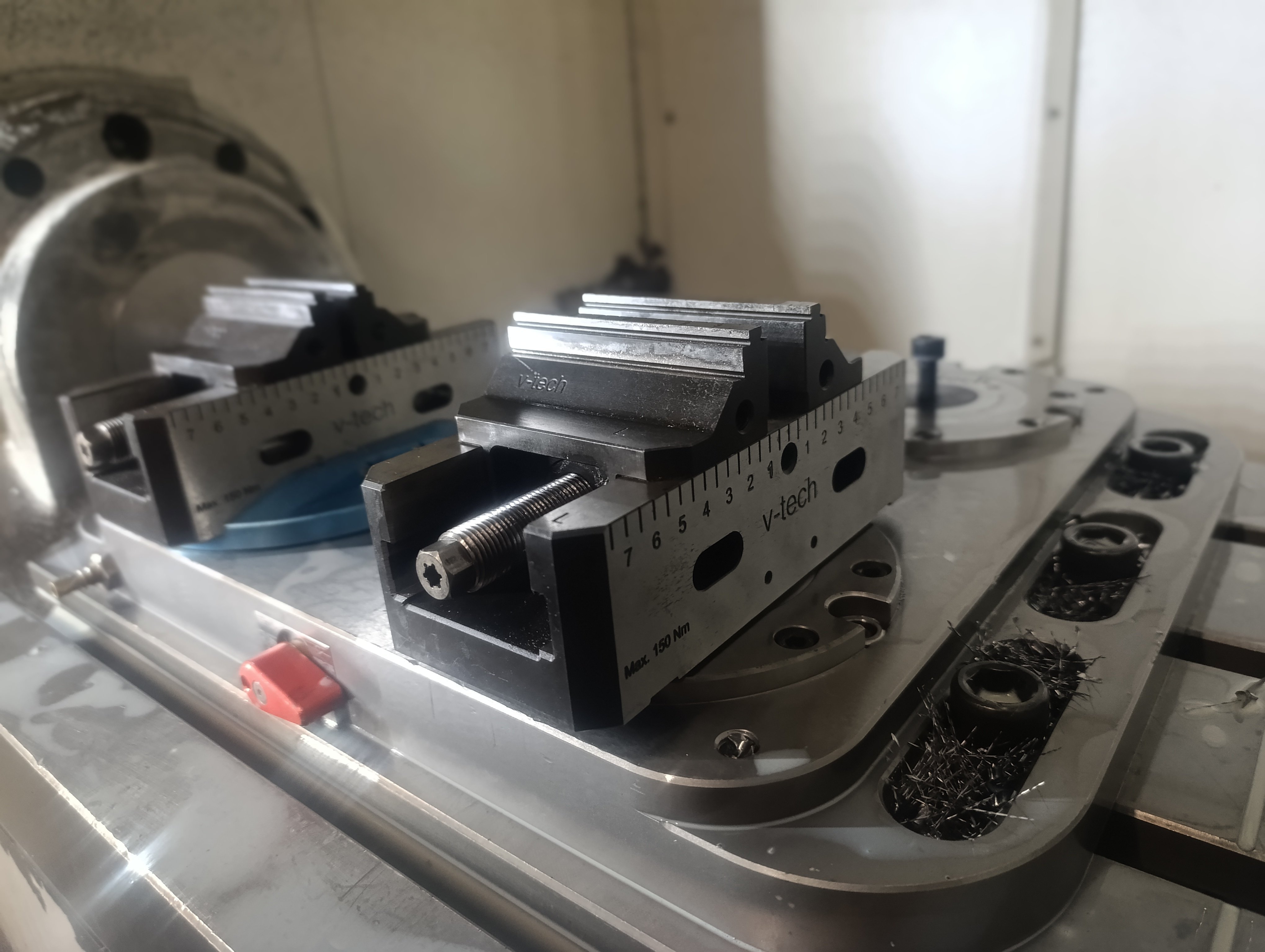

Modern modular clamping systems, such as the ZEPO-v solution, use zero-point technology, which enables a radical reduction in setup times. The next job can be prepared away from the machine, and the pallet change itself takes only a few seconds while maintaining high positional accuracy. This significantly reduces unproductive times and minimizes the risk of errors during setup.

Process stability is further ensured by advanced sensor technology and monitoring software, such as CNC Sensor or SENSO AI, which monitor the machine's operating status, production cycles, and downtime in real time. This data can be used to objectively evaluate production efficiency, identify process weaknesses, and create a basis for further optimization.

How can v-tech s.r.o. help you with CNC automation and clamping technology?

V-tech s.r.o. has long specialized in the design and delivery of complete solutions for CNC manufacturing – from clamping systems and automation to monitoring and evaluation of production data. Thanks to our in-house development of mechanics and software, we are able to offer our customers solutions that are based on real production needs and are ready for long-term development.

Not sure what to do? Contact us.

If you are unsure about choosing the right clamping system, automation, or production monitoring, please contact us. Together, we will review the current state of your production,

define your goals, and propose specific technical solutions that match your capabilities and plans for the future.

Summary

CNC technology forms the basis of modern engineering production today. It combines high precision, repeatability, and the ability to control processes based on data. It enables companies to make better use of machine capacity, increase productivity, and respond flexibly to changes in demand while maintaining pressure on quality, costs, and energy efficiency. The direction of further development is clearly determined by automation, robotic cells, smart clamping systems, and digitization, which turn CNC workplaces into stable and sustainable production solutions.

Frequently asked questions

Is automation using robots also suitable for small-batch production?

Yes. Automation used to be the domain of large series, but thanks to modular systems and smart interfaces, it is now also available for piece and small-batch production. The robot can flexibly change workpieces, pallets, and clamping fixtures and handle various orders within a single unattended shift.

How to start automating older CNC machines?

For older CNC machines, the most effective approach is often a technical retrofit, adding a modular zero-point clamping system and implementing machine data monitoring. This creates a stable foundation for further steps, such as robotic loading and advanced CNC automation. To design a suitable procedure, you can contact the v-tech s.r.o. team.

Leave us a message and we will get back to you as soon as possible.

  • Fields marked with an asterisk (*) are required.

This website uses cookies

This website is using cookies to provide services, personalize ads, and monitor traffic. By continuing to use this site you are agreeing with usage of cookies. More information.